
Course Convenors
Dr. Sreeram
Date & Time
Date: 22 Jan 2027 to 23 Jan 2027
Time: 8:30AM to 5:30 PM
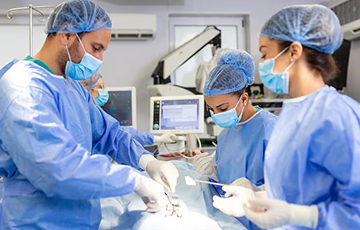
Laparoscopic Training Lab Well Equipped Skills Lab
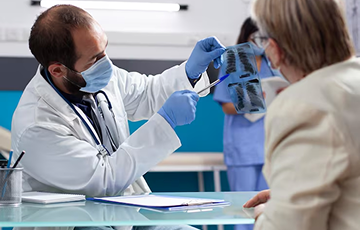
Experienced Faculty Onsite trainee hand holding subsequently
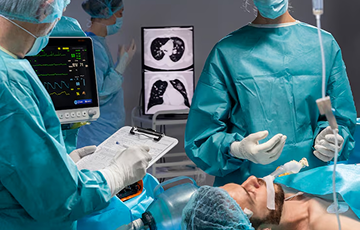
Hands-on simulator Tissue models and live demonstration

C. Palanivelu
Founder President,AMASI

Dr.P Senthilnathan
President,AMASI

Dr. Tamonas Chaudhuri
Secretary,College of MAS

Dr. Sreeram
Course Convenor
Dear Esteemed Participants,
WELCOME TO UGI SURGERY COURSE
It is my distinct honour and privilege to warmly welcome you all to the UGI Surgery Course. It is a great pleasure to have you join us for this focused academic programme dedicated to advancing knowledge, surgical skills, and clinical expertise in Upper Gastrointestinal Surgery.
This course has been thoughtfully designed to provide an engaging blend of expert-led lectures, interactive case discussions, live operative demonstrations, and practical surgical learning. Our aim is to bridge the gap between knowledge and surgical practice by focusing on contemporary approaches, technical principles, operative decision-making, and the management of challenging Upper GI conditions.
The scientific programme will cover important aspects of Upper GI surgical practice, including patient evaluation, surgical planning, minimally invasive approaches, operative techniques, management of complications, and current advances in the field. Through live surgery and detailed operative demonstrations, participants will have the opportunity to appreciate surgical anatomy, technical nuances, intraoperative decision-making, and practical strategies that can be incorporated into everyday surgical practice.
Our distinguished faculty, with their wealth of experience and expertise, will share not only their knowledge but also valuable insights gained from years of clinical and operative practice. The interactive format of the course will encourage meaningful academic exchange, allowing participants to discuss challenging cases, clarify doubts, and learn directly from experienced surgeons.
I encourage every participant to make the most of this opportunity—with curiosity to learn, enthusiasm to participate, and commitment to refine surgical skills. I am confident that the knowledge, techniques, and practical insights gained during this course will add significant value to your surgical practice.
Let us make this course an enriching experience of learning, sharing, innovation, and surgical excellence.
With highest regards,
C. Palanivelu
Course Director
Learning Outcomes
Understand the relevant anatomy and surgical principles of the upper gastrointestinal tract.
Identify indications, contraindications, and patient-selection criteria for upper GI surgery.
Understand preoperative evaluation, operative planning, and perioperative management.
Describe the fundamental steps of laparoscopic upper GI procedures.
Develop familiarity with minimally invasive surgical instruments, equipment, and operating-room setup.
Understand techniques for safe dissection, tissue handling, haemostasis, and intracorporeal suturing, as applicable to the programme.
Recognise potential intraoperative and postoperative complications and discuss strategies for their prevention and management.
Interpret clinical scenarios and apply evidence-based principles to surgical decision-making.
Improve awareness of patient safety, surgical ergonomics, and best practices in minimally invasive surgery.
- Interact and network with fellow participants, faculty members, and experts in the field, fostering collaboration and professional growth
Who Should Take This Course ?
General Surgeons interested in developing their upper GI surgical skills.
Surgical Gastroenterologists seeking to enhance their knowledge of minimally invasive upper GI procedures.
Practising surgeons looking to update their knowledge of current surgical techniques and best practices.
Surgeons with prior laparoscopic experience who wish to strengthen their understanding of upper GI surgery.
Postgraduate surgical trainees and fellows, subject to the course eligibility criteria.
Course Highlights
The Programs
- Expert-led lectures on advanced Upper GI surgery
- Live surgical demonstrations by experienced faculty
- Hands-on training with practical surgical techniques
- Laparoscopic Upper GI procedures
- Advanced suturing and anastomosis techniques
- Management of complex Upper GI cases
- Interactive case discussions and surgical decision-making
- Tips, tricks & troubleshooting from experienced surgeons
- Small-group practical sessions for better learning
- Opportunity to interact with renowned faculty and peers
Live surgery,Master videos and Expert Panel discussion for Gastric diseases
1.Laparoscopic Fundoplication
2.Laparoscopic Heller’s Cardiomyotomy
3.Laparoscopic TV-GJ
4.Laparoscopic Distal Radical Gastrectomy with D2 Lymphadenectomy 5.Laparoscopic Total D2 Gastrectomy with intracorporeal reconstruction
1.Laparoscopic management of Para-esophageal Hiatus hernia
with/without gastric volvulus – Technical tips
2.MIS management of gastric GIST tumors
3.Indications and technical aspects of radical gastrectomy 4.Indications and technical aspects of distal pancreatectomy
splenectomy in advanced gastric cancer.
5. Reconstructive methods after gastrectomy – Technical Tips
6.Panel Discussion – Complications of fundoplication – prevention and
management. Slipped wrap, Wrap migration into mediastinum, Tight wrap and Loose warp
7.Redo surgery for failed lap fundoplication
Live surgery, Master Videos and Expert Panel discussion for Esophageal Diseases
1.Two stage Ivor-Lewis esophagectomy with Intrathoracic anastomosis
2.Three stage Thoraco-Laparoscopic Mckeowns esophagectomy 3.Laparoscopic Transhiatal Esophagectomy
4.Types of reconstructive methods after esophagectomy
5.Complications of MIE, Anastomotic leak and Stricture management
6.Lap / Thoracoscopic esophageal Leiomyoma excision
7.Lap Transhiatal excision of Esophageal Diverticulum and Cysts
8.Panel discussion on Guidelines for Treatment of esophageal cancer
Registration