
Course Highlights
Day 1 : Fistula & pilonidal sinus
Day 2 : Hemorrhoids & Fissure-in-Ano
Course Convenors
Dr. Pinak Dasgupta
Dr. Samrat Jankar
Dr. K. Balu
Date & Time
Date: 29-05-2026 to 30-05-2026
Time: 8:30AM to 5:30 PM

Well Equipped Skill Lab
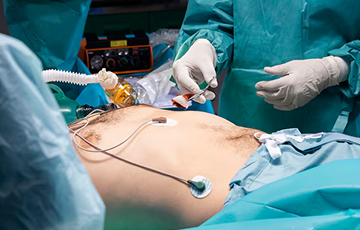
Live Demonstrations
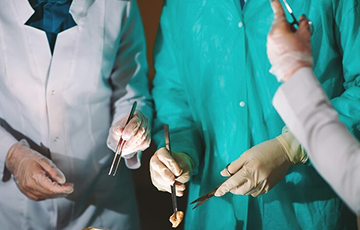
Hands On

C. Palanivelu
Founder President,AMASI

Dr. Kalpesh Jani
President,AMASI

Dr. Tamonas Chaudhuri
Secretary,College of MAS

Dr. Pinak Dasgupta
Course Convenor

Dr. Samrat Jankar
Course Convenor

Dr. K. Balu
Course Convenor
Dear Esteemed Surgical Colleagues,
A warm and heartfelt welcome to the Minimally Invasive Proctology Course.We are delighted to have you join us for this comprehensive and immersive academic program, thoughtfully structured to provide clarity, confidence, and practical mastery in modern proctology.
This course brings together the essential pillars of proctology—including Fistula-in-Ano, Pilonidal Sinus Disease, Hemorrhoids, and Anal Fissure—with a strong focus on evidence-based thinking, operative precision, and structured decision-making. Over the next two days, our goal is to offer an enriching blend of foundational concepts, algorithmic learning, and live operative demonstrations that will strengthen your overall approach to perianal diseases.
Day 1: Fistula & Pilonidal Sinus
We begin with a deep dive into fistula management, starting with a re-learning of anal canal anatomy, followed by core concepts such as anogenital sepsis, the importance of identifying the internal opening, and how to interpret an MRI fistulogram meaningfully for operative planning.
You will gain a surgeon-friendly understanding of fistula classifications, logical algorithms, and decision-making principles that help balance radical clearance with sphincter preservation.
Detailed discussions will follow on key surgical techniques including LIFT, fistulotomy, FIXcision, seton strategies, and sphincter-preserving approaches, supported by live operative sessions to illustrate the thought process behind each step.
The latter part of the day focuses on Pilonidal Sinus Disease—its etiology, anatomical mapping (pits, cavity, tracts), classification, and a practical algorithmic approach to treatment. You will also learn the nuances of minimally invasive techniques such as EPSiT and VALAPS, and strategies for managing recurrence.
Day 2: Hemorrhoids & Fissure-in-Ano
Day two centers around two of the most common yet often misunderstood proctological conditions.
We begin with hemorrhoids, covering anatomy, vascular cushion physiology, pathophysiology, clinical examination, grading, and OPD-based decision making. The spectrum of management—from conservative care to office procedures such as RBL, sclerotherapy, and infrared coagulation, and operative techniques including hemorrhoidectomy, laser hemorrhoidoplasty, and stapled procedures—will be discussed in a practical, surgeon-focused manner.
The second half of the day is dedicated to anal fissures, addressing pathophysiology (acute vs chronic), clinical features, medical management, the role of Botox, and surgical options such as LIS, controlled/graded sphincterotomy, and fissurectomy with advancement flap. Functional outcomes, continence preservation, and long-term healing principles will be emphasized.
Live procedures, case-based discussions, and open forums will ensure that you leave with clarity, confidence, and a stronger operative mindset.
Closing Note
We hope this course not only enhances your clinical reasoning and operative skills but also builds a network of committed surgical colleagues who share a passion for advancing proctology in a safe, structured, and evidence-guided manner.
Thank you for being a part of this academic journey.
We wish you an intellectually stimulating and rewarding experience.
With highest regards,
Course Convenors
Dr. Pinak Dasgupta
Dr. Samrat Jankar
Dr. K. Balu
Learning Outcomes
- Strong Foundation in Modern Proctology
Comprehensive understanding of anatomy, clinical examination, and practical classification of Hemorrhoids, Fistula-in-Ano, Pilonidal Sinus, and Anal Fissure. - Algorithmic Clinical Decision-Making
Learn practical, surgeon-friendly algorithms for managing complex proctology cases with clarity and confidence. - Technical Mastery Through Hands-On
Gain hands-on exposure to LIFT, FIXcision, fistulotomy, EPSiT, VALAPS, laser techniques, hemorrhoid procedures, and fissure surgeries. - Laser Application Expertise
Understand indications, limitations, and safety principles for using laser in Fistula, Hemorrhoids, and Fissure in real operative scenarios. - Advanced Procedure Familiarity
Learn minimally invasive hybrid techniques for fistula, modern approaches for pilonidal sinus, and functional-preserving surgery for fissure. - Patient-Centered Management
Master practice approaches to pain control, constipation, wound care, recurrence prevention, and functional outcome preservation. - Proctology Practice Setup Insights
Learn essentials of proctology practice setup including instrument selection, dressing techniques, biofeedback basics, and OPD workflow. - Professional Networking
Engage with expert faculty and peers to build long-term collaborative relationships. - Certification
Receive recognized certificate on successful completion of the course.
Who Should Take This Course ?
This course is ideal for medical professionals who want structured, practical, surgeon-oriented learning in Minimally invasive proctology:
- General Surgeons
Looking to enhance knowledge and hands-on skills in proctology. - Colorectal Surgeons & Proctologists
Seeking updates on advanced and minimally invasive techniques. - Surgical Gastroenterologists
Interested in expanding their practice into anorectal disease management. - Surgical Residents & Fellows
Wanting early, structured exposure to the fundamentals and advanced principles of proctology.
Course Highlights
- Exclusive Skill Lab with simulators and real instruments for hands-on training.
- Live Surgery Demonstrations covering complex fistula, pilonidal sinus, hemorrhoids, and fissure cases.
- One-on-One interaction with experienced faculty for personalised learning.
- Practical, Surgeon-Focused Curriculum built around real-life cases, algorithms, and operative decision-making.
- Latest Technologies including laser, hybrid techniques, staplers, and minimally invasive approaches.
- Post-Course Mentorship and ongoing academic support.
- Networking Platform for collaboration with experts and colleagues.
- Recognised Certification validating your training in minimally invasive proctology.
The Programs
Fistula& pilonidal sinus Introduction to course Re learning Anatomy of anal canal Fistula in ano
- Anogenital Sepsis: Core Concepts & Surgical Implications
- Internal Opening: Detection Techniques & Surgical Importance
- MRI Fistulogram: Practical Reading & Operative Correlation
- Fistula Classification: Simple, Practical, Surgeon-Friendly
- Approach to Fistula: Algorithmic, Logical, Evidence-Based
- Surgical Procedures: Principles, Indications & Decision-Making
- Post-operative Care: Healing, Hygiene & Recurrence Prevention
Pilonidal sinus
- Understanding Pilonidal Disease: Concepts & Anatomy
- Etiology & Clinical Features: What Every Surgeon Must Know
- Mapping the Disease: Pits, Cavity, Tracts
- Algorithmic Approach to Pilonidal Sinus
- Minimal Access Surgery: EPSiT & VALAPS Techniques.
- Managing Recurrence: Strategy & Decision-Making
- Choosing the Right Procedure: Practical Decision Points
Hemorrhoids & Fissure-in-Ano Hemorrhoids
- Understanding Hemorrhoidal Anatomy & Physiology
- Pathophysiology: What Actually Causes Symptoms
- Clinical Evaluation: Practice & Objective Assessment
- Classification & Grading: Practical Use in Decision-Making
- Algorithmic Approach to Hemorrhoids: Conservative to Surgical
- Office Procedures: Principles & Pearls
- Surgical Procedures: Thoughtful Selection & Execution
- Post-Operative Care: Healing, Pain, and Complication Prevention
Fissure-in-Ano
- Understanding Pathophysiology: Acute → Chronic Transition
- Clinical Features: Identifying Typical vs Atypical Fissures
- Diagnosis: Practical Examination Strategy
- Approach to Anal Fissure: Stepwise Algorithm
- Medical Management: What Works, What Doesn’t
- Role of Botox: When, How, and For Whom
- Surgical Options: Decision-Making & Safety
- Post-Operative Care & Functional Outcomes